Scientists Discover Mechanism Driving Molecular Network Formation
(EPFL, February 17, 2025)
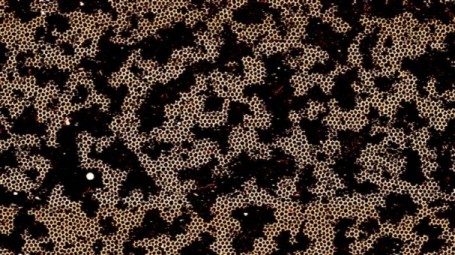 Researchers at EPFL, led by Prof. Georg Fantner and Prof. Maartje Bastings, have found that interface flexibility, rather than chemical bond strength, plays a key role in the formation of crystalline supramolecular networks. By using nanoengineered DNA stars and adjusting the strand lengths, they were able to control their flexibility. Short, rigid arms encouraged the formation of stable hexagonal networks, while long, flexible arms did not.
The team's findings open new doors for designing proteins and molecules for precise self-assembly, potentially transforming cellular nanotherapies. Manipulating interface flexibility could enable the construction of supramolecular networks from proteins or offer new ways to break down harmful molecular aggregations, such as those seen in Alzheimer's disease. This approach introduces a groundbreaking paradigm in molecular assembly and network formation, promising advancements in spintronics and the development of innovative electronics and therapeutic strategies.
Researchers at EPFL, led by Prof. Georg Fantner and Prof. Maartje Bastings, have found that interface flexibility, rather than chemical bond strength, plays a key role in the formation of crystalline supramolecular networks. By using nanoengineered DNA stars and adjusting the strand lengths, they were able to control their flexibility. Short, rigid arms encouraged the formation of stable hexagonal networks, while long, flexible arms did not.
The team's findings open new doors for designing proteins and molecules for precise self-assembly, potentially transforming cellular nanotherapies. Manipulating interface flexibility could enable the construction of supramolecular networks from proteins or offer new ways to break down harmful molecular aggregations, such as those seen in Alzheimer's disease. This approach introduces a groundbreaking paradigm in molecular assembly and network formation, promising advancements in spintronics and the development of innovative electronics and therapeutic strategies.