Digital Mouse Brain Model Mimics Real Wiring
(EPFL, September 01, 2025)
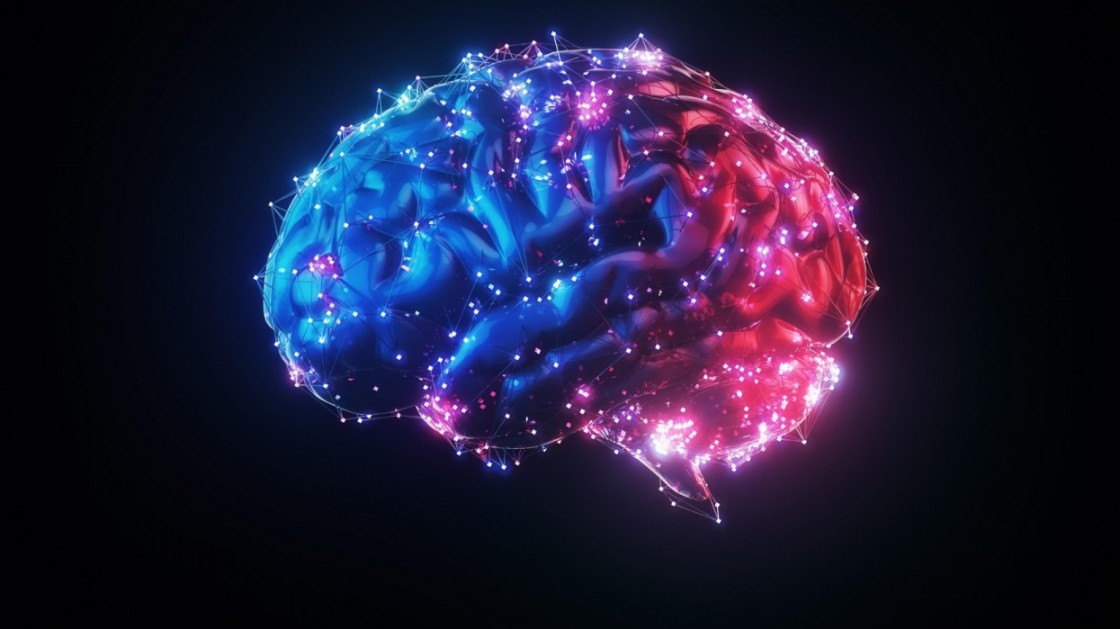 For the first time, a team has created a digital mouse brain model with wiring that mirrors real brain connections, opening new paths for exploring how the brain functions. Researchers Prof. Dr. Remy Petkantchin, Dr. Lida Kanari, and their team from EPFL, Southeast University, and Shanghai Academy of Natural Sciences have devised a method to produce brain-wide connection maps that closely resemble the mouse brain's actual wiring. This work marks a significant leap in understanding the complex networks of the brain, offering fresh perspectives on neurological diseases and cognitive functions.
The team analyzed vast datasets of "axonal reconstructions" and used machine learning to categorize neurons by their wiring patterns. They then applied a computational method to create synthetic axons that replicate the branching and connections of real neurons in different brain areas. This innovation brings us closer to extensive brain simulations and informs future neuroscience research, potentially ushering in new treatments for neurological disorders. EPFL's method, merging cutting-edge machine learning with detailed mathematical modeling, also presents an innovative approach to mapping the brain's elaborate networks.
For the first time, a team has created a digital mouse brain model with wiring that mirrors real brain connections, opening new paths for exploring how the brain functions. Researchers Prof. Dr. Remy Petkantchin, Dr. Lida Kanari, and their team from EPFL, Southeast University, and Shanghai Academy of Natural Sciences have devised a method to produce brain-wide connection maps that closely resemble the mouse brain's actual wiring. This work marks a significant leap in understanding the complex networks of the brain, offering fresh perspectives on neurological diseases and cognitive functions.
The team analyzed vast datasets of "axonal reconstructions" and used machine learning to categorize neurons by their wiring patterns. They then applied a computational method to create synthetic axons that replicate the branching and connections of real neurons in different brain areas. This innovation brings us closer to extensive brain simulations and informs future neuroscience research, potentially ushering in new treatments for neurological disorders. EPFL's method, merging cutting-edge machine learning with detailed mathematical modeling, also presents an innovative approach to mapping the brain's elaborate networks.