Study Shows Monkeypox Can Infect the Human Brain
(University of Bern, July 09, 2025)
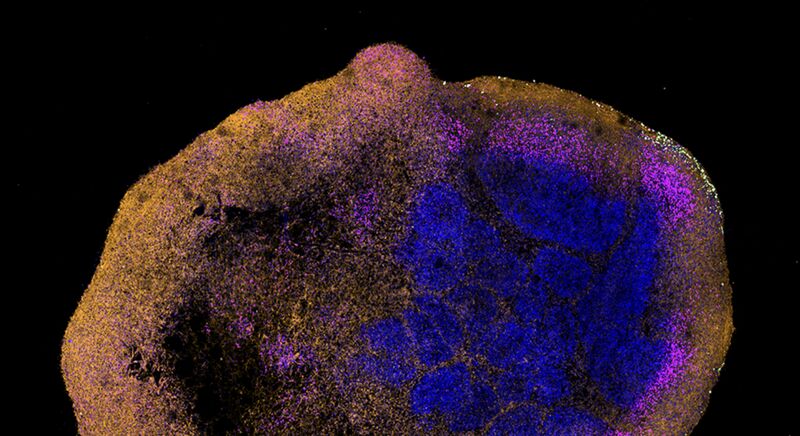 Researchers, including Isabel Schultz-Pernice and Prof. Dr. Marco P. Alves from the University of Bern, the Institute of Virology and Immunology IVI, the University of Lausanne, and the Spiez Federal Laboratory, have shown that the monkeypox virus (MPXV) efficiently spreads between cells in human brain organoids, causing significant neuron death. This discovery reveals the virus's potential to harm the human central nervous system and highlights the urgent need for further study into its effects on the brain. The finding that MPXV can destroy neurons without damaging surrounding tissues deepens our understanding of its threat to our health.
Using 3D tissue models from human stem cells, the team replicated brain features to observe MPXV's behavior. They infected these organoids with a virus sample from a 2022 outbreak patient and used advanced imaging to watch the virus move through neurons. This research not only proves brain organoids as a valuable, ethical alternative to animal testing but also suggests potential treatments. For example, the antiviral drug Tecovirimat significantly reduced the infection in this study, offering hope for combating MPXV's neurological effects.
Researchers, including Isabel Schultz-Pernice and Prof. Dr. Marco P. Alves from the University of Bern, the Institute of Virology and Immunology IVI, the University of Lausanne, and the Spiez Federal Laboratory, have shown that the monkeypox virus (MPXV) efficiently spreads between cells in human brain organoids, causing significant neuron death. This discovery reveals the virus's potential to harm the human central nervous system and highlights the urgent need for further study into its effects on the brain. The finding that MPXV can destroy neurons without damaging surrounding tissues deepens our understanding of its threat to our health.
Using 3D tissue models from human stem cells, the team replicated brain features to observe MPXV's behavior. They infected these organoids with a virus sample from a 2022 outbreak patient and used advanced imaging to watch the virus move through neurons. This research not only proves brain organoids as a valuable, ethical alternative to animal testing but also suggests potential treatments. For example, the antiviral drug Tecovirimat significantly reduced the infection in this study, offering hope for combating MPXV's neurological effects.